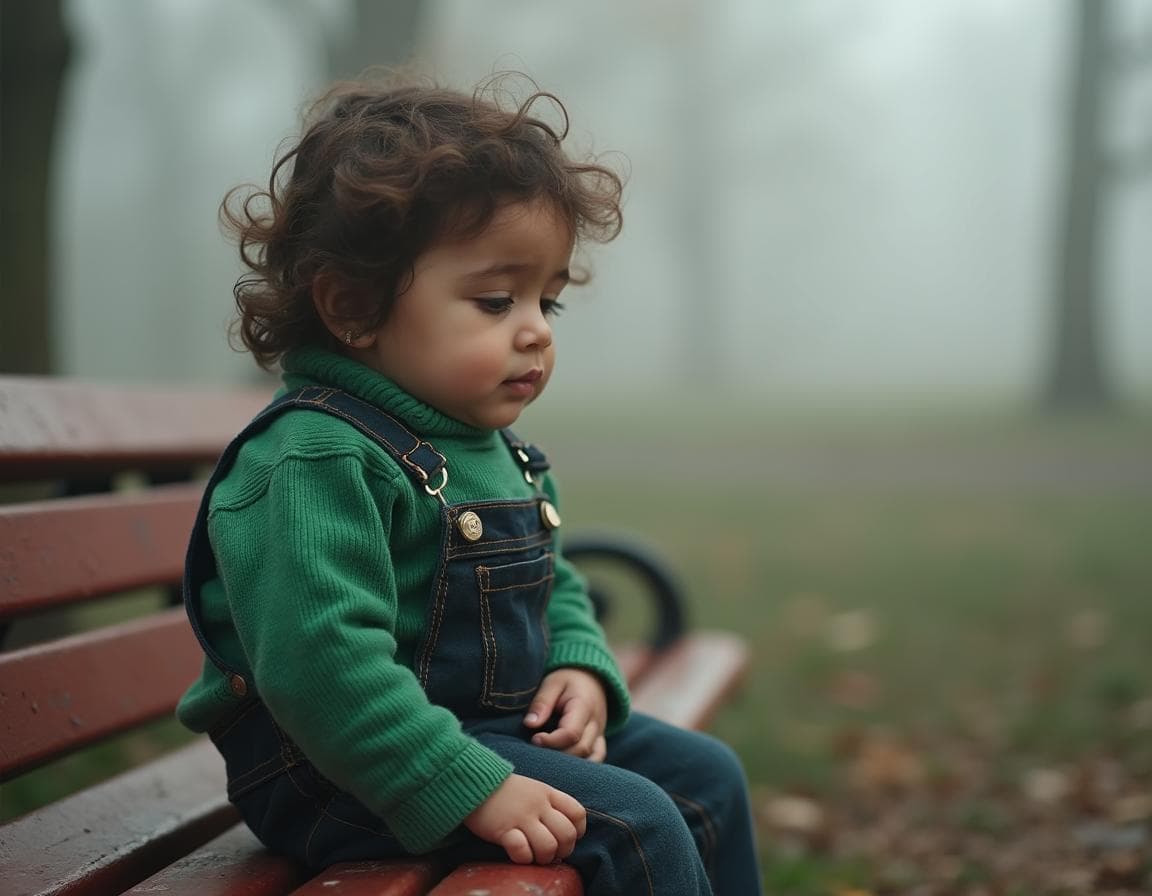


Thousands of parents make a promise to themselves every day, "Today I won't yell. Today I will be calm, wise and patient." But as the morning passes, the child again refuses to put on his jacket, pulls the cat's tail, or spills juice on the freshly mopped floor - and patience cracks at the seams. Sound familiar?
We love our kids endlessly, but sometimes anger overwhelms us. And every time our voice breaks into a shout, there is an unpleasant residue inside: "Why didn't I hold back again?"
Why did I hold back?
Can we learn not to get angry? You can. But to do so, you have to look inside yourself, understand what triggers the mechanism of irritation, and learn to react differently to children's pranks, whims and protests.
So you can learn to stop being angry.
Why is anger stronger than we are?"
.Imagine this: you come home after a hard day. Your head is buzzing, your energy is almost gone. And then your child makes a scene because his favorite spoon is the wrong color. Or doing homework for two hours instead of twenty minutes.
That's when the brain, tired of information and stress, can't take it anymore. It goes into "emergency mode" - a burst of anger. And now we are not talking, but shouting. We don't explain, we give out punishments.
What to do to keep from snapping?
.Remember that the child in front of you
Yes, it sounds cliché. But sometimes we expect adult behavior from children: logic, self-control, responsibility.
But children live by feelings. They genuinely care about the color of the spoon in their hands. They really want one more fairy tale before bedtime. They don't know how to control emotions the way adults do.
Your anger is about your expectation that your child "should behave differently."
.What to do?" Take a breath and say to yourself, "He's not doing anything to spite me. He's just a kid. I'm the adult, it's up to me to decide how to react."
Imagine being around someone else's child
.Your friend's child spills compote on the couch. Would you yell at him? Probably not.
What to do? Try switching your perception: Imagine it's not your child, but your nephew, a neighbor's boy, someone else's kid on the playground. This technique helps to remove unnecessary emotional charge and react more calmly.
Take a pause
When you feel anger coming on, stop.
Take three breaths. Three seconds of silence.
If you have to, leave the room, drink water, count to ten. Anger is like a boiling kettle: if you take it off the fire, it stops whistling.
What to do. Make a rule: "I breathe first, then I speak."
How to do it?
Change the scream to a whisper
Paradox: The louder an adult yells, the less a child can hear it. But when mom or dad suddenly starts talking quietly, it has a surprise effect.
What to do? Instead of raising your voice, try lowering it to a whisper. Not only does this reduce tension, but it also forces the child to listen.
Ask yourself: "How does he feel?"
Every child's behavior is a message. Caprices, tears, stubbornness are the language the child uses to say:
What to do? Try not to get angry, but ask the question, "Why is he acting this way? What is he feeling right now?"
When an adult notices the child's emotions, the situation stops being a "conflict" and becomes an opportunity to help.
Have a balance of self-care
A tired, stressed, emotionally burned out parent cannot be patient.
A child needs a parent who feels good about themselves, not one who is struggling to be patient.
What if you've already been yelled at?"
We're not perfect. Sometimes our patience breaks and anger spills out. The key is not to ignore it
Acknowledge the mistake - say, "I'm sorry, I didn't mean to get so angry."
Discuss the situation - "It upset me that you didn't listen. Let's try to solve it in a different way."
Show that you know how to correct mistakes - the child learns by example, not by words.
When an adult admits a mistake, he or she does not lose authority, but teaches the child healthy communication and the ability to ask for forgiveness.
Acknowledge a mistake - say, "I'm sorry, I meant to be so angry.
Conclusion: anger is not an enemy, but it's not a friend
.We get angry because we care. We want our children to grow up kind, well-mannered, self-reliant.
But if every day becomes a battlefield, it's worth asking ourselves, "Do I want to be right - or happy?"
Every day is an opportunity to respond in a new way. Choose understanding over anger.
Choose calm over irritation.
Choose love over fear.
And then your child will grow up not just obedient, but confident, happy and understanding that mom and dad are a place where they are always loved, even when they make mistakes.